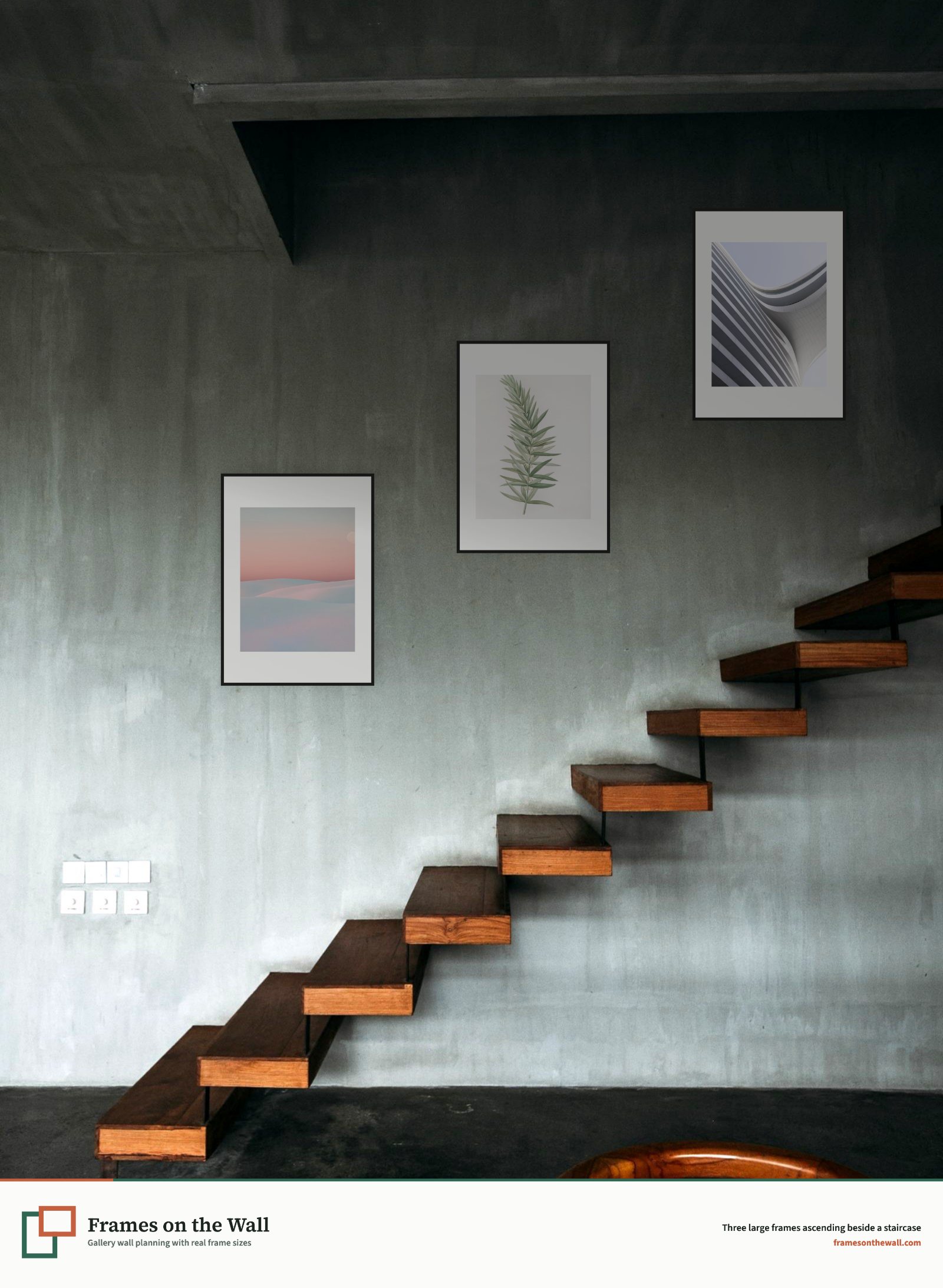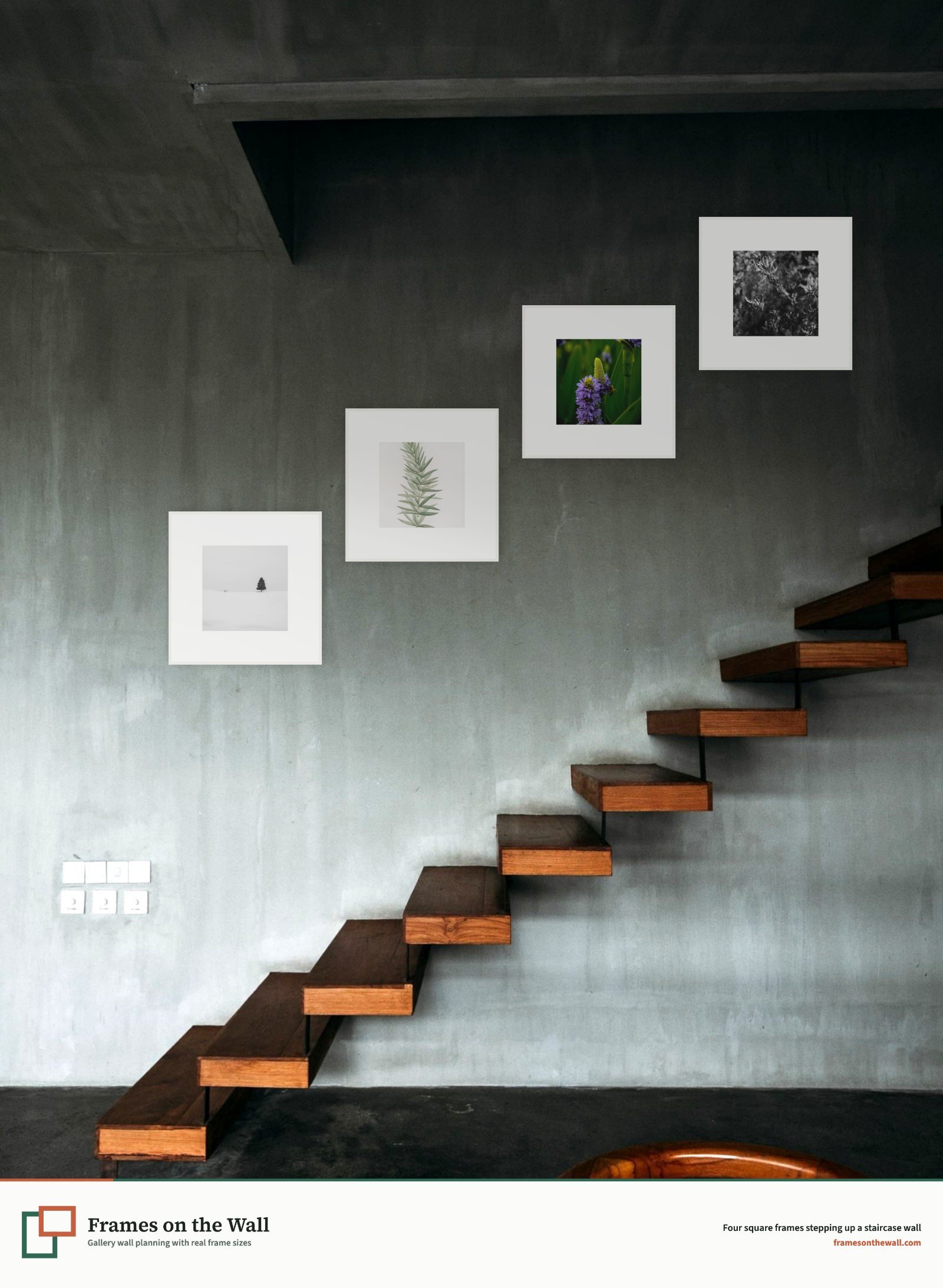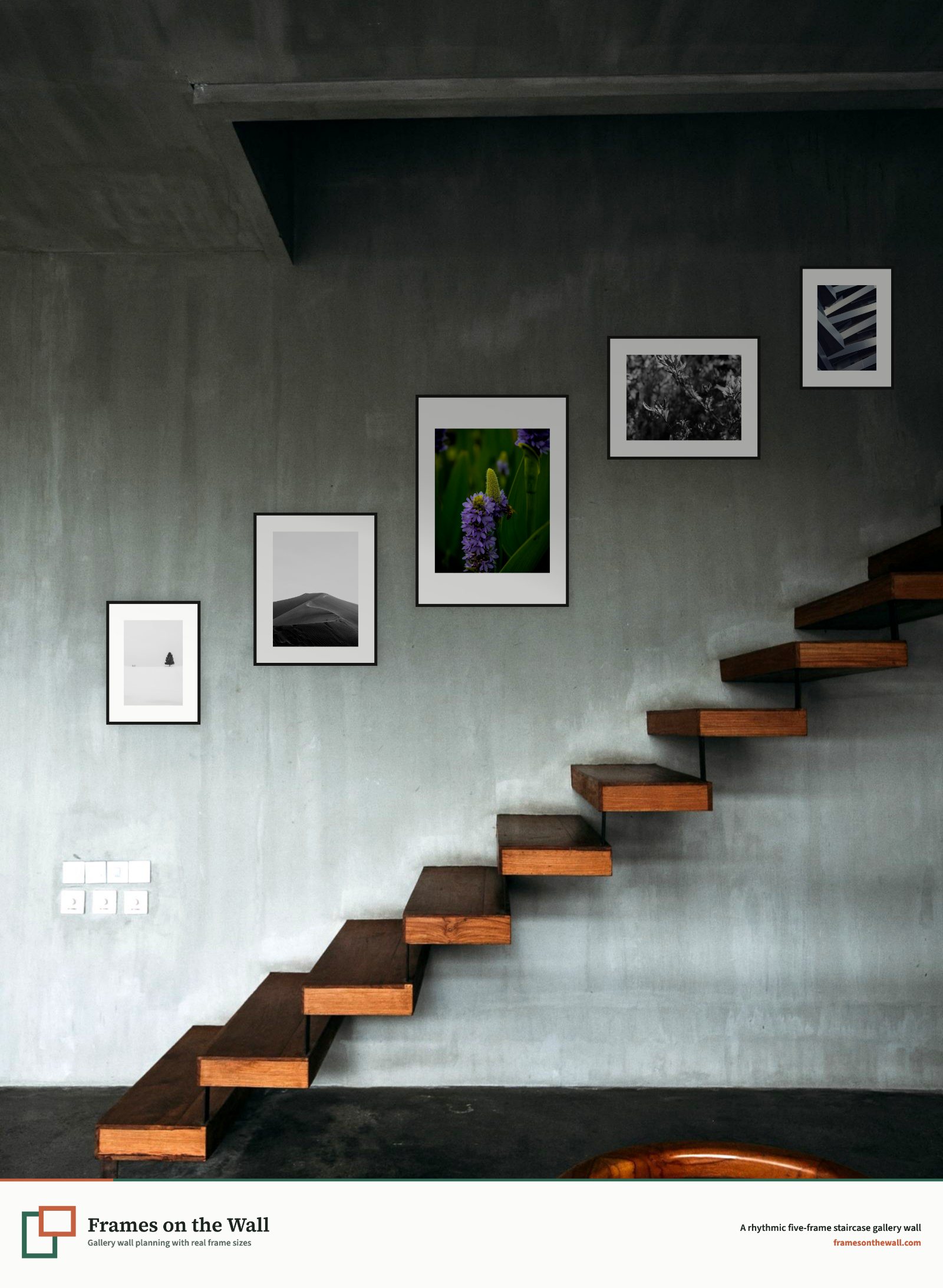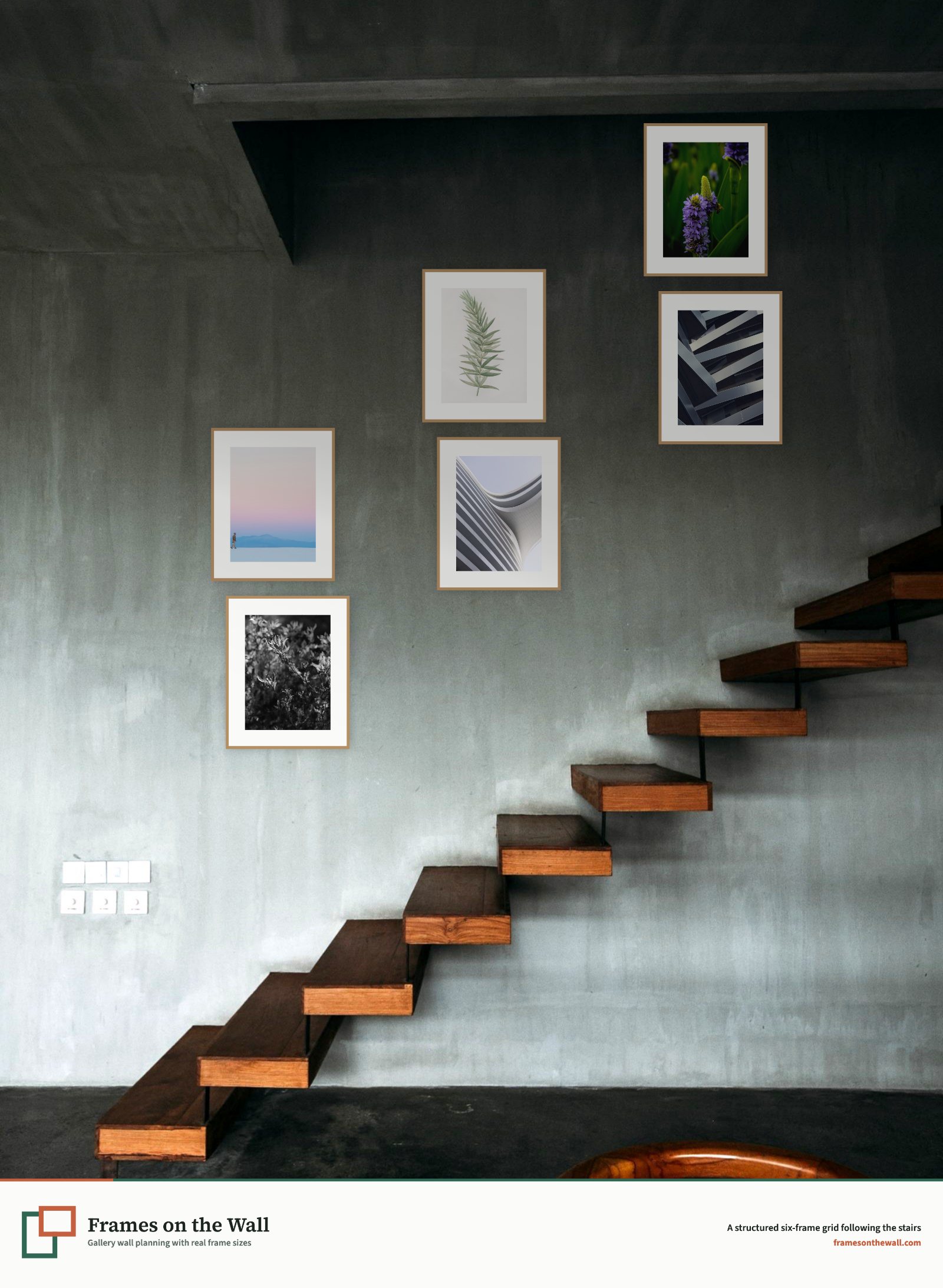
Start with the stairs, not the empty wall
A staircase can make an enormous blank wall look deceptively simple. The difficulty is that there is no single floor line. Stand one or two treads below the place where a frame will hang and measure from that tread. Repeat the same centre height as you move upward, then step back to check the diagonal from both landings. The handrail is a useful visual guide, but rarely a reliable measuring edge.
Design for two journeys
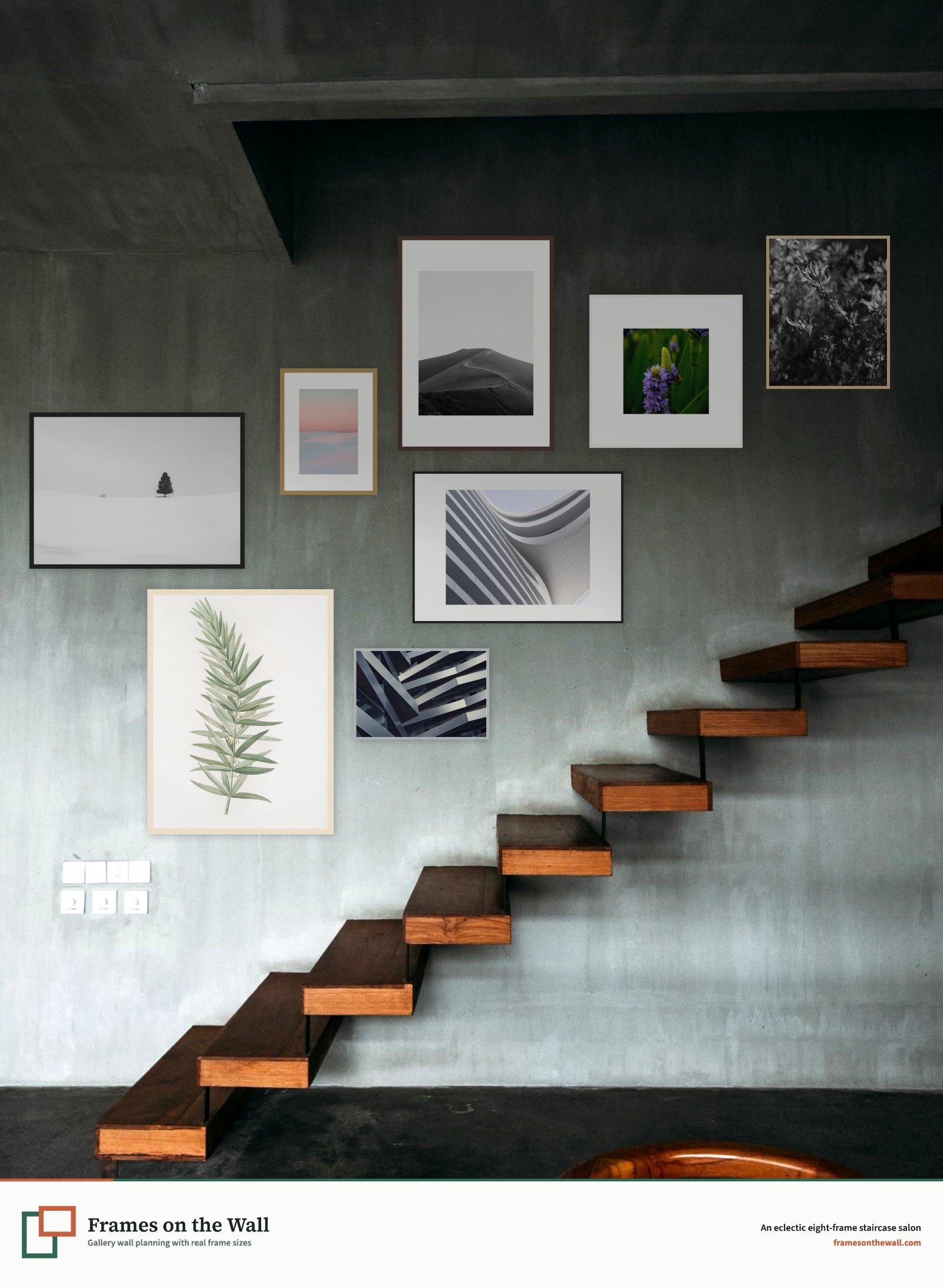
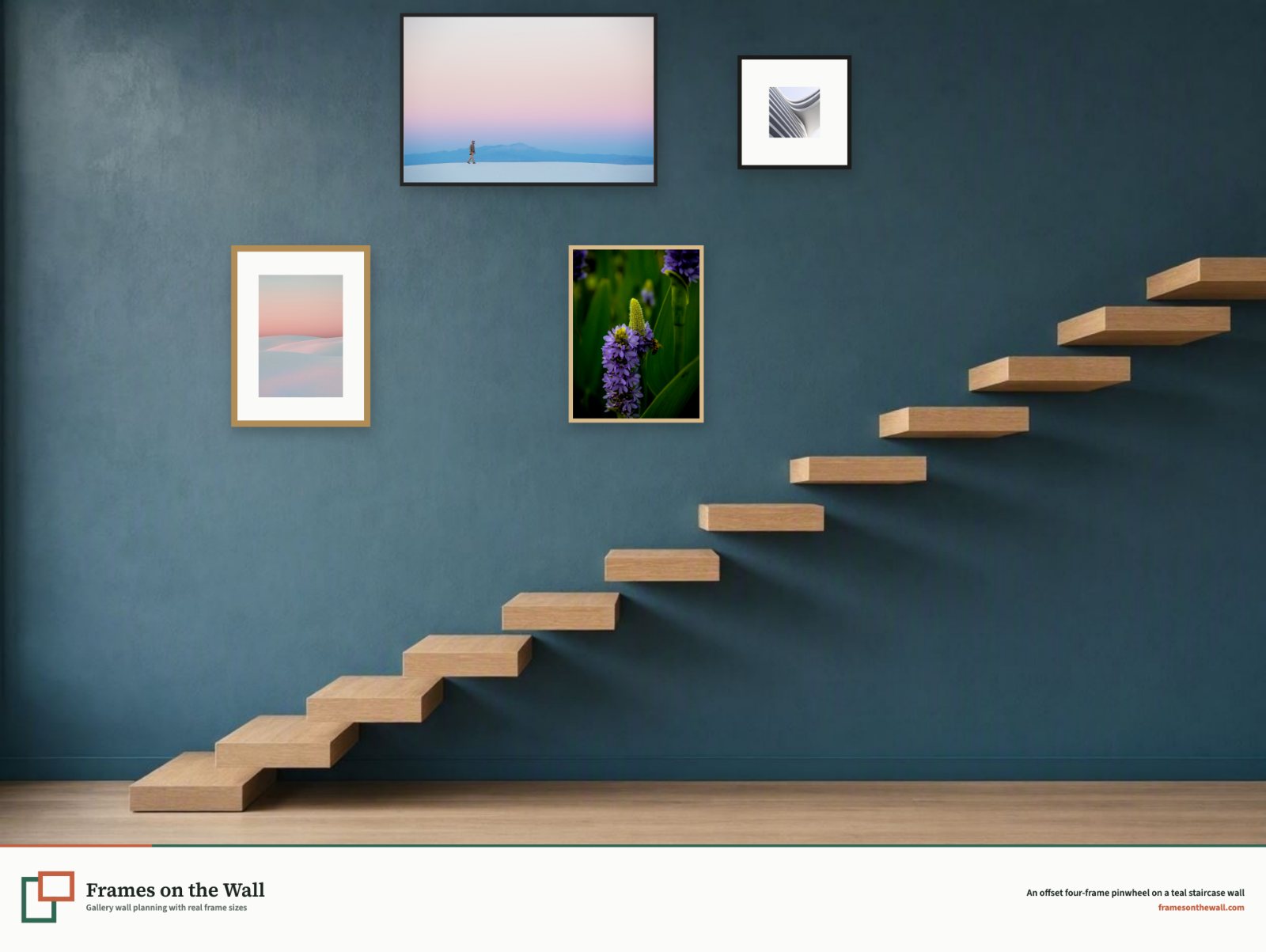
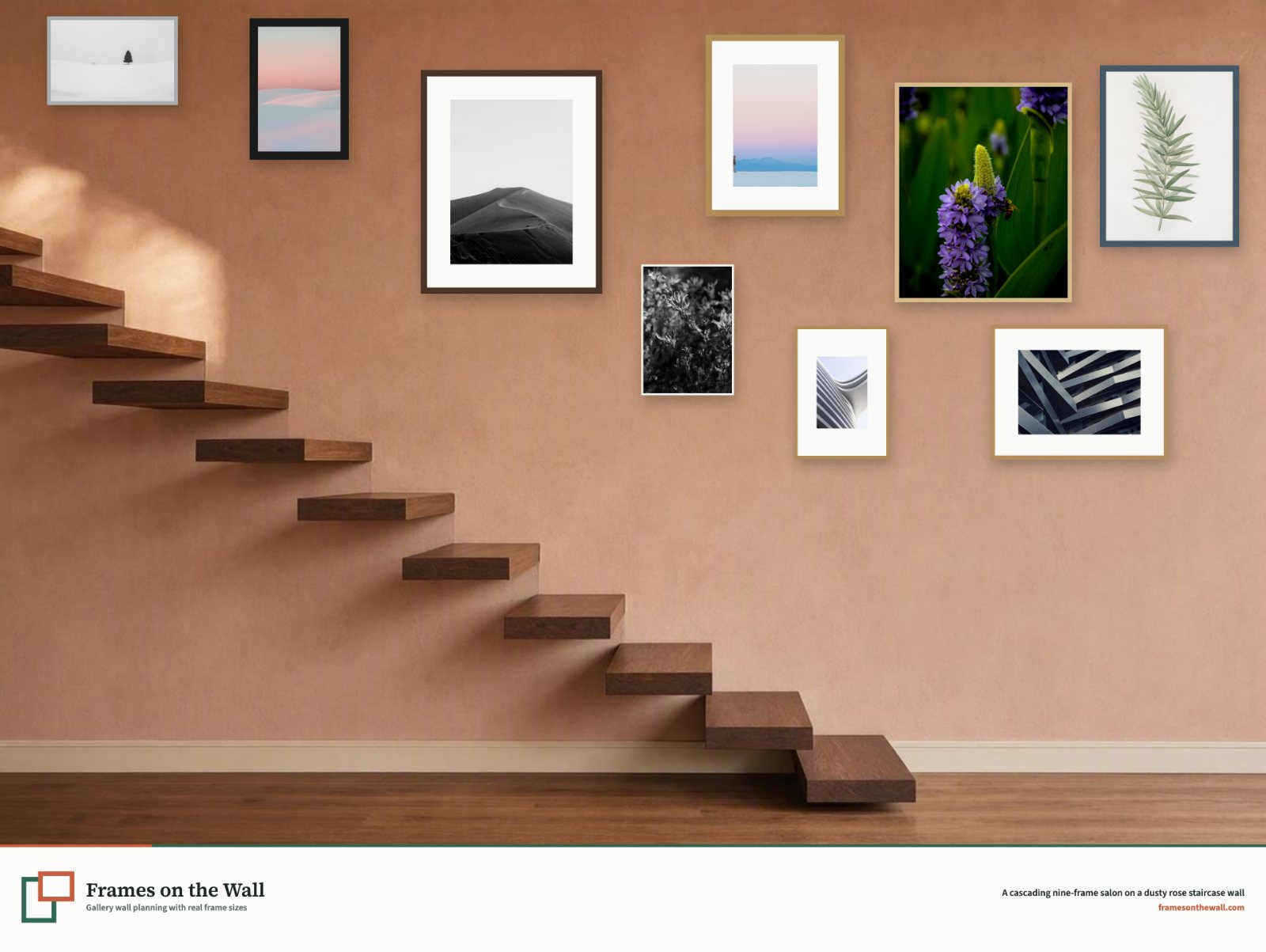
People read the wall differently on the way up and on the way down. In any case, it helps if your frames follow the inclination of the staircase. Try and hang them about 140cm (about 55 inches) above your stairs (of course there is room for deviating from this rule). To test this on your real wall: hang some tape above your first and last tread (you can add the middle one as well), and connect these pieces with a wire or longer piece of tape.
Colour can carry part of the rhythm
Deep teal turns a sparse four-frame cluster into a confident focal point, while dusty rose makes a larger mixed salon feel warm rather than busy. Using our gallery wall planner tool, you can easily play around with different wall colours and frame arrangements.